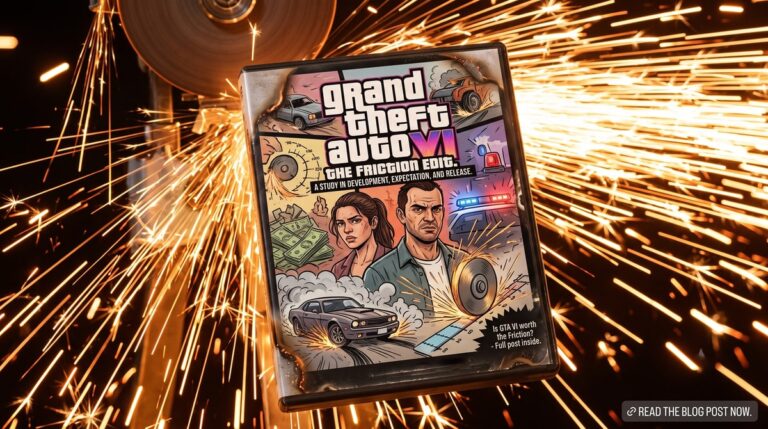
If you are a gamer, you know people have been waiting over a decade for the release of Grand Theft Auto 6. It may not be your cup of tea or mine, but GTA5 has over 4 million daily players (almost 20 million weekly). Presales of GTA are estimated to be as high as 65 million.
The retailer of the game indicated earlier this year that purchasing the $80 USD game would give you a piece of paper with a download code. No physical media with the game on it. A game you had to download. That really upset a lot of gamers. The internet almost melted down! It was difficult to buy, time-consuming to download, and impossible to share or resell once completed. That’s a lot of not-so-cool things to consider before purchasing.
That started me thinking about friction in business.
In digital marketing, we usually have our (hopefully) persuasive copy and a call to action. We try to make it easy for our potential clients to take the next step in the customer journey (e.g. sign up for my mailing list).
Friction is anything that makes that next step a little harder. Friction can be good or bad, intentional or unintentional. Let’s take a closer look…
Unintentional Friction
Unintentional friction is friction we might introduce before or after our call to action. Unintentional frictrion often falls into three buckets: trust friction (a basic Gmail or Hotmail address, no testimontials, no clear pricing), effort friction (too many form fields, too many steps, slow pages), and clarity friction (unclear CTA, mismatched landing page). Here are some examples:
- Not using a good domain name and business email might make your business look less trustworthy, causing potential clients to hesitate.
- If you only accept cash or e-transfer, you might limit purchases. Some people may incur a fee to e-transfer. Using a payment gateway moves the cost of acquiring customers to your business, and allows you to accept addition payment types like credit cards and Google Wallet/Apple Pay.
- If you sell products, forcing someone to create a username and apssword just to buy one item is a pain! Think about providing a guest checkout.
- Make sure your call to action is clear. If your call to action sends your potential client to a home page instead of a specific page, or a button just says “Learn More” instead of “Book Your Free Consult”, you force the visitor to figure out what to do next.
- A five-step booking or checkout where a two or three-step one would do give potential clients more opportunities to get distracted, hesitate, or abandon the process.
- You should know how visitors browse your site. If any part of your site, especially your call to action and checkout, are clunky on a mobile device like a phone, you could be adding fraction for a big part of your traffic.
Intentional Friction
Intentional friction usually works well because it either filters (weeds out people who aren’t ready or aren’t a fit) or builds percieved value (makes the eventual ‘yes’ feel earned considered, or personalized).
Some examples:
- Instead of an instant “buy now,” some coaches and consultants use an “apply now” button that leads to a short application. This does two things: it filters out people who aren’t a good fit, and it subtly reinforces that the offer is valuable enough to be selective about.
- Rather than open enrollment at all times, requiring people to join a waitlist creates a natural pause. It also lets you gauge real interest (people who join a waitlist are more qualified leads than casual browsers) and builds anticipation for when doors do open.
- For service providers where scope and fit really matter (contractors, consultants, therapists), skipping straight to payment can lead to mismatched expectations later. A required discovery call adds friction, but it protects both parties and often increases the eventual close rate because trust is built first.
- Asking a few questions before pointing a potential client to “the right option for you” slows the path to purchase, but it makes the eventual recommendation feel personalized rather than generic, which can increase both conversion and satisfaction.
- Adding a step where clients have to read and sign terms, even for smaller services, sets a professional tone and makes sure both sides are aligned before money or work changes hands. It also reduces disputes down the line.
- If someone is trying to cancel a paid membership, adding a short “are you sure?” screen, sometimes with an alternative offer, gives them a moment to reconsider. This is friction used to reduce unwanted churn rather than to qualify new leads.
So, How Much Friction is Too Much?
The lesson here is simple: unintentional friction can cost you clients and money. Intentional friction can save you headaches down the road.
If a video game publisher forces millions of fans to jump through digital hoops, they and the entire internet are going to hear about it! If you unintentionally force your clients to search for a booking link or fill out too much information for a $20 product, they won’t complain. They’ll leave.
Your Homework: Visit your website and audit your customer journey. Find one piece of unintentional friction and eliminate it. Then, look for a place where adding some intentional friction might help improve client leads.